Life After Meeting the Wizard
A Playfully Serious Guide to Waking Up, Letting Go, and Getting Lucky

This post emerged from a curious blend of influences: a dream I had last night about weaving together ideas from four books I’ve been savoring over the past year, a series of playful AI experiments with my creative friend Meri Walker, and the steady, insightful help of my AI collaborator, Martha.
At the end of this piece, you’ll find a behind-the-scenes look at how it all came together, along with the full list of books that inspired it.
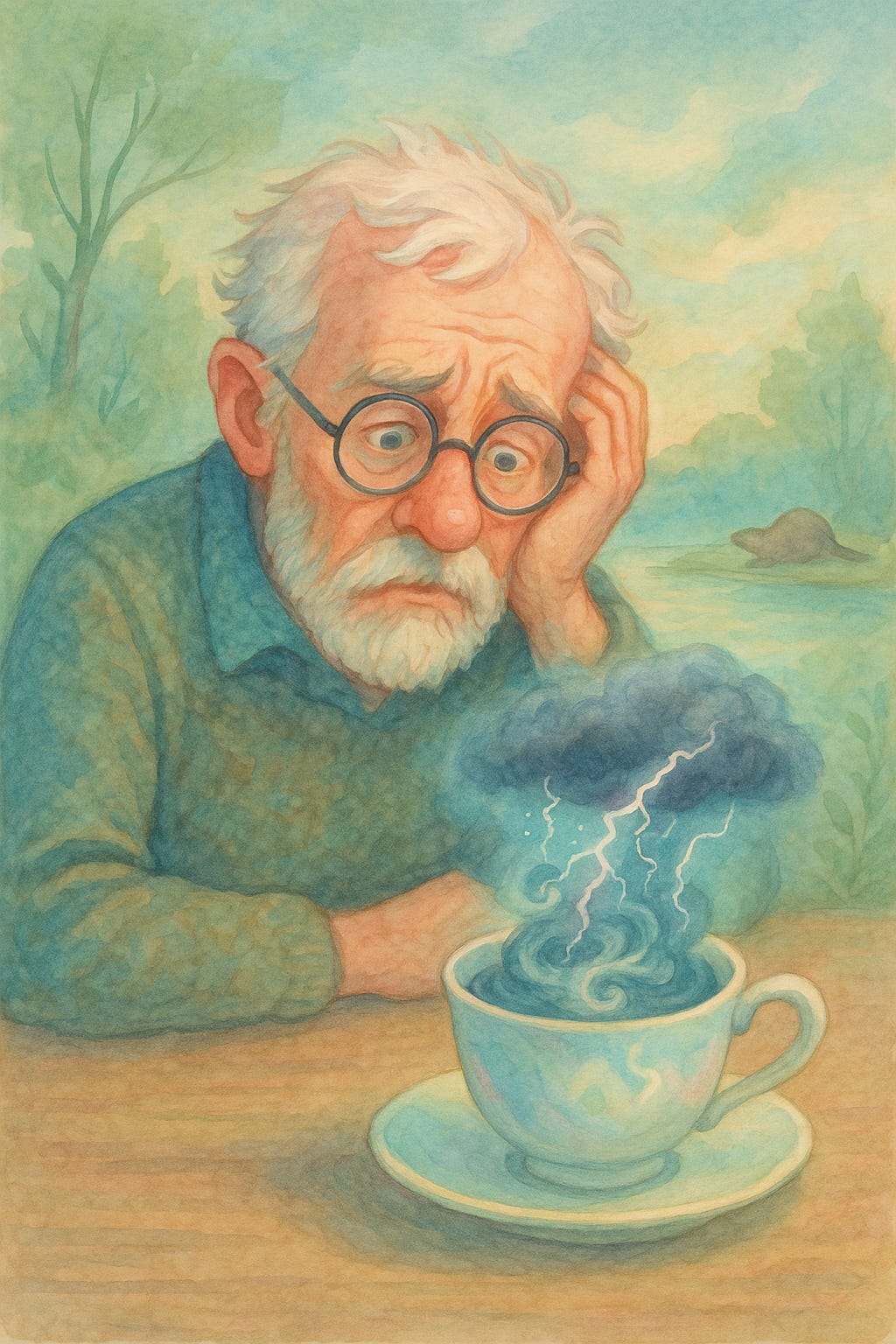
So, you’ve peeked behind the curtain. You’ve caught a glimpse of the cosmic prank: the sense of control you clung to was a shimmering illusion. Life is a hurricane in a teacup, and your ego’s not even holding the handle.
Now what?
You could panic. You could double down on self-improvement podcasts and microdosed journaling. Or . . . hear me out . . . you could laugh, let go, and lean into a kind of enlightened opportunism.
Let’s take a little journey, guided by four unexpected co-conspirators: a spiritual surgeon (Awake), a chaos-loving political scientist (Fluke), a philosophical time-whisperer (Meditations for Mortals), and a skeptical psychologist who actually studies luck (The Luck Factor). Together, they reveal how we can prosper not by clinging tighter, but by loosening our grip.
The House of Mirrors
In Awake: It’s Your Turn, Angelo DiLullo cuts to the heart of the matter: you’re not who you think you are.
No, really; you are literally not who you think you are. Because you’re not a thought at all.
According to DiLullo, we spend most of our lives trapped in a funhouse mirror maze of thoughts and identities, mistaking the echo for the source. We mistake the description of a thing for the thing itself. We believe “I am anxious” or “I am successful” or “I am a spiritual person,” as though those are solid states of being instead of mental graffiti.
And this illusion — that we’re separate, controllable, permanent selves — is the root of our existential vertigo.
Awakening, says DiLullo, is the moment you tumble through a trapdoor in the funhouse and land in something startlingly real. You discover you’re not the puppeteer. You’re the breeze moving the curtain. There’s peace here, but also disorientation. Because when you no longer believe the story, who are you?
If this sounds terrifying, you’re not alone. Most of us resist awakening like we resist jury duty. We keep busy. We build egos. We curate Instagrammable identities. But sooner or later, the illusion gets wobbly — and that's where the fun begins.
Welcome to Flukeville, Population: Everyone
Just when you think you're special, Fluke by Brian Klaas arrives like a well-thrown banana peel.
Klaas reminds us that life is not just unpredictable — it's wildly, chaotically, gloriously unfair. A butterfly sneezes in Peru, and three years later you meet your spouse on a delayed train you weren’t supposed to take.
Our brains hate this. We crave cause and effect, neat narratives, and heroic arcs. So we airbrush randomness out of the picture, attributing success to hustle and failure to personal flaw. But the truth is, much of life is one big cosmic dice roll.
“Everything happens for a reason” sounds comforting, but it’s also flat-out wrong. Sometimes, things just… happen. Lightning strikes. Viruses mutate. You stumble into your dream job because your neighbor’s cousin canceled last minute.
Here’s the paradox Klaas offers: recognizing the sheer unpredictability of life can be liberating. When you stop pretending to control it all, you stop blaming yourself (and others) for every unexpected twist. You start showing up — not to dominate, but to dance.
Which brings us to our next dance partner.
Time Isn’t Money. It’s a River.
Oliver Burkeman’s Meditations for Mortals offers gentle, paradoxical advice for those of us gasping for air in the sea of infinity.
Burkeman's central premise is deceptively simple: You’re going to die. You have finite time, finite attention, and a tragically beautiful human mind that wants to do everything. And that’s not a bug — it’s the feature.
Productivity culture tells us to “get on top of things,” but Burkeman waves a friendly white flag: there is no “top.” There’s just life — messy, limited, unpredictable, beautiful. And trying to get it all right is a cosmic misunderstanding.
You don’t need to master the universe to begin. You don’t need to become your best self before you start doing meaningful things. You just need to begin — badly, bravely, and right where you are.
In other words, once you give up on controlling everything, you gain the one thing that matters: agency. Not the rigid, white-knuckled kind, but the responsive, flowing kind. You become a partner in the dance, not the choreographer.
And guess what? That’s exactly how luck works.
The Surprisingly Scientific Art of Getting Lucky
Dr. Richard Wiseman spent a decade studying lucky people. Not rabbits-foot kind of lucky, but consistently, frustratingly, life-goes-their-way lucky.
And he found something wild: luck isn’t magic. It’s a mindset. A skill. A way of walking through the world.
Here’s how the lucky do it:
They maximize chance opportunities.
Lucky people talk to strangers, try new routes, take detours, and mess around. This looseness — this open, relaxed engagement — makes them more likely to notice and act on lucky breaks.
Why it matters post-illusion: After realizing you don’t control the world, you stop needing it to follow your plan. You get curious. You get weird. You wander. And suddenly, you're bumping into possibility at the coffee shop.
They trust their gut.
Lucky folks act on intuition. They don’t overanalyze every fork in the road. They notice the tug of curiosity or discomfort and follow it — often into unexpected bounty.
Why it matters post-illusion: Thoughts are tricky. Intuition cuts through noise. DiLullo would say this is what direct experience feels like: vivid, real, unfiltered. Listening to it doesn’t guarantee outcomes, but it guarantees aliveness.
They expect good fortune.
Not because they’re delusional, but because optimism shapes reality. Self-fulfilling prophecies are real. Confidence invites collaboration. Hope keeps you moving.
Why it matters post-illusion: If nothing’s under control, you might as well assume the best. And funnily enough, that assumption keeps you in the game long enough to get lucky.
They turn bad luck into good.
Lucky people reframe setbacks. They zoom out, imagine worse alternatives, and keep moving. Resilience, it turns out, is less about strength and more about story.
Why it matters post-illusion: In a world where meaning is fluid, you’re free to choose the meaning that helps you thrive. Bad luck isn’t proof of failure — it’s raw material for growth.
The Punchline (and a Useful Question)
Once the curtain falls on the illusion of control, you don’t disappear — you reappear, more awake, more playful, more capable than ever.
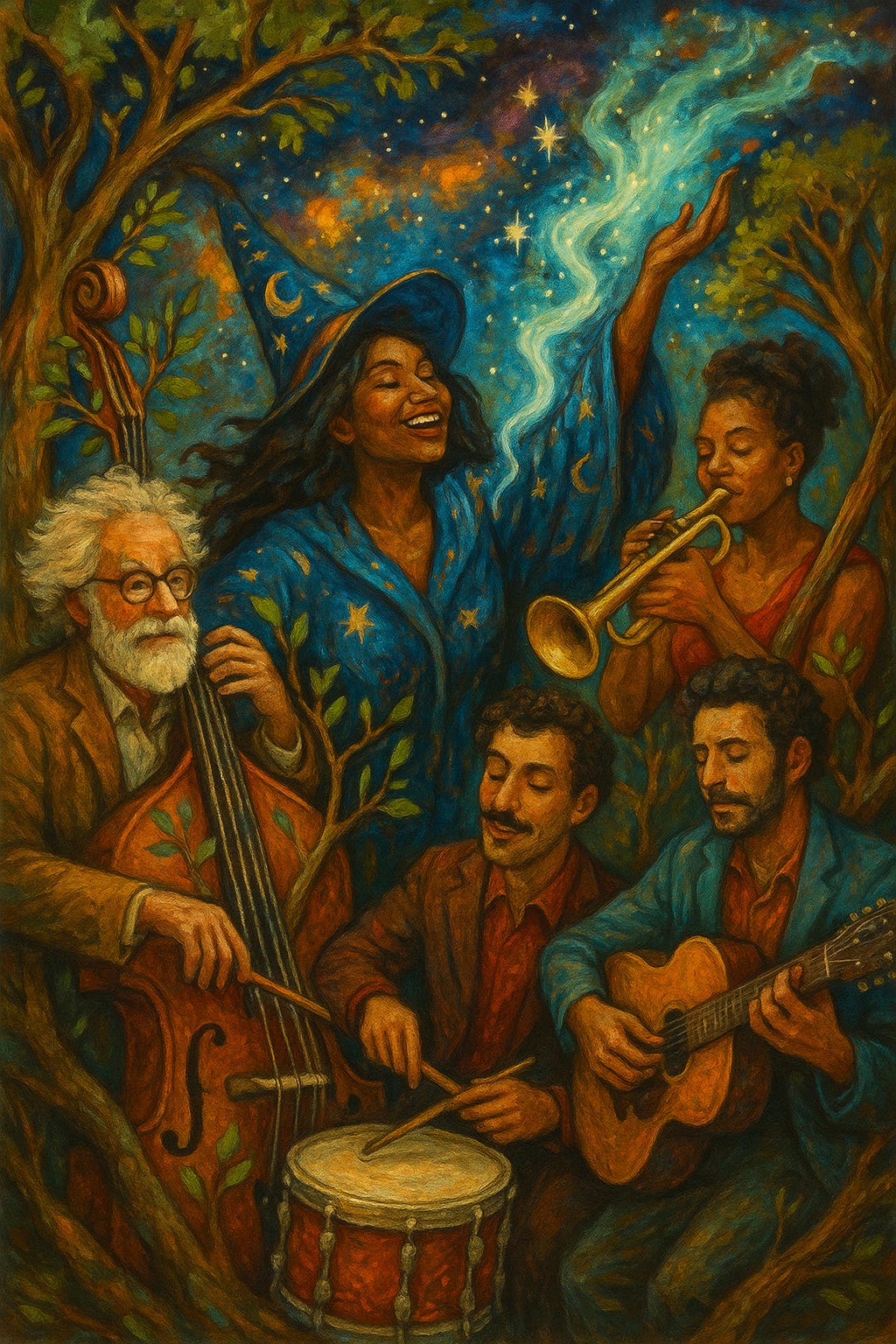
Life isn’t a puzzle to solve. It’s a mystery to live. The trick is to stop playing chess against the universe and start playing jazz with it.
So here’s the question: What would change if you approached life like a musician in an improvisational jam — curious, responsive, trusting the rhythm?
How to Start Today
Let’s wrap with a few ridiculously practical steps to prosper in this post-illusion playground:
Strike up a conversation with someone new. No agenda. Just human curiosity.
Leave five minutes of “nothing” in your day. Watch your thoughts scurry. Don’t follow. Just notice.
Take a small risk. Wear the weird shirt. Send the wild idea. Say yes to the unexpected invite.
Flip your latest frustration. Ask: How might this be good luck in disguise?
Laugh at yourself, kindly. You’ve been trying to control the ocean. Adorable.
Final Thought: You Don’t Need to Be Ready
You don’t need to become someone else. You don’t need to master a philosophy. You don’t even need to finish this article (though thank you — you just did!).
You only need to realize this: Life was always unpredictable, you were always more than your thoughts, and prosperity doesn’t come from gripping tighter — it flows from letting go, tuning in, and showing up.
Now go improvise something beautiful.
How This Blog Post Came to Be
Over the past two years, I’ve been reaping the surprising rewards of collaborating with my AI partner, Martha (aka ChatGPT-4o). One of her many talents is taking my overflowing piles of notes and helping me find the golden threads, those coherent story arcs that somehow manage to make sense of my scattered scribbles.
Last night, after a rich conversation with my friend and fellow AI co-experimenter, Meri Walker, about using AI to help integrate our thinking, I had a dream (the vivid, plot-twisting kind) in which four books I’ve been savoring suddenly lined up like puzzle pieces. The dream showed me a way they might be processed by AI to reveal a surprising throughline, one that could help illuminate the path from illusion to agency.
Here are the four books that made a cameo in my subconscious (and now, this blog post):
Awake: It’s Your Turn by Angelo DiLullo
Fluke by Brian Klaas
Meditations for Mortals by Oliver Burkeman
The Luck Factor by Dr. Richard Wiseman
To bring this vision to life, I first gathered my notes on all four books and uploaded them into NotebookLM. I asked it to summarize and sequence the material in a way that reflected the insights I felt each book had offered me. Once NotebookLM stitched together a single document, I handed the baton to Martha.
I uploaded the summary to ChatGPT-4o and shared my intention: to trace a journey from the illusions we hold about self, reality, and control. And then all the way to a deeper understanding and the kind of practical wisdom that Richard Wiseman’s “luck principles” offer. I asked Martha to write a blog post in my voice, tying it all together under the title: Life After Meeting the Wizard.
And the images? Also Martha. I described what I had in mind, and she conjured them up. Meri kindly suggested the order and placement — a true collaborative swirl of imagination, tech, and intuition.
So there you have it — both the blog post and the story behind it. I continue to be amazed and grateful for the chance to work alongside this new form of intelligence, and for the many ways human-AI collaborations like this can spark insight, joy, and maybe even a bit of magic.
This was a delight to read. Thank you for writing it, Tom, and thank you for the introduction to the work, Meri!
It’s sooooo delightful to see this post with the artwork top and bottom, Tom!! I’m crazy about what you’re doing with Martha and grateful for the chance to learn together at this astonishing time of life - our lives and the life of the astonishing Artificial Intelligence with which we’re exploring new relationships. Aren’t we lucky??!!!